Food Packaging Bags: Key Material & Performance Standards for Steamed Dried Snacks
Walk into any supermarket snack aisle, and you will see dozens of different food packaging bags holding dried fruits, root vegetable strips and ready-to-eat cooked snacks. For steamed sweet potato strips, dried hawthorn, preserved vegetables and similar low-moisture heat-processed food, ordinary plastic bags cannot meet long-term storage requirements. Choosing matching flexible food pouches has become a basic course for all food processing factories. This article sorts out the core knowledge of mainstream food packaging bags, to help food branders pick packaging materials that fit their product positioning.
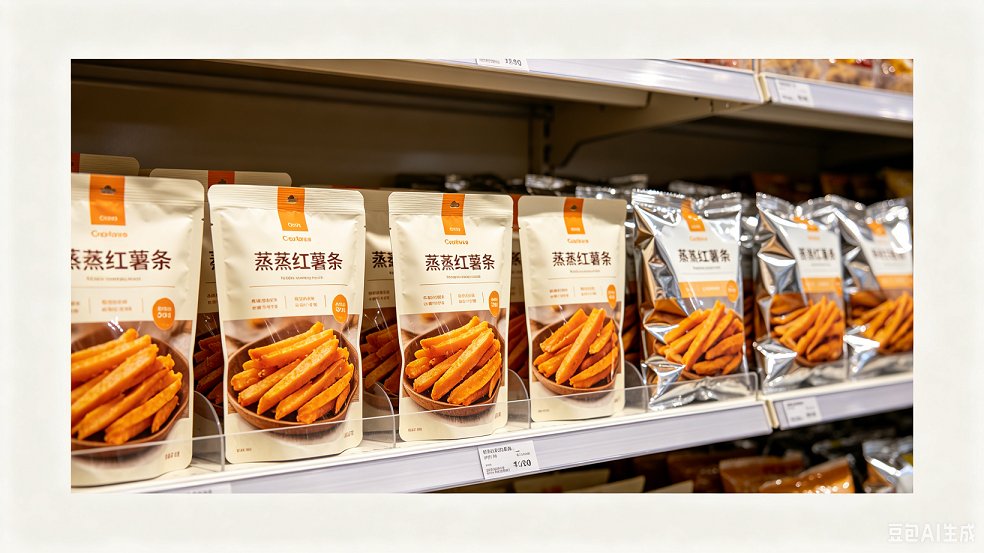
1. Classification of Common Food Packaging Bags
Food packaging bags on the market are divided into two major categories according to heat resistance: normal temperature composite bags and high-temperature retort pouches.
1.1 Normal temperature food packaging bags
These pouches are made of PET, PE or BOPP single-layer or double-layer composite film. They only adapt to unheated finished food such as candies, puffed snacks and freeze-dried fruit. They cannot bear high-pressure steam sterilization above 100℃, and will delaminate, leak or release peculiar plastic smell under high temperature environment. Their barrier performance is general, suitable for products with a shelf life within 3 months.
1.2 High temperature retort food packaging bags
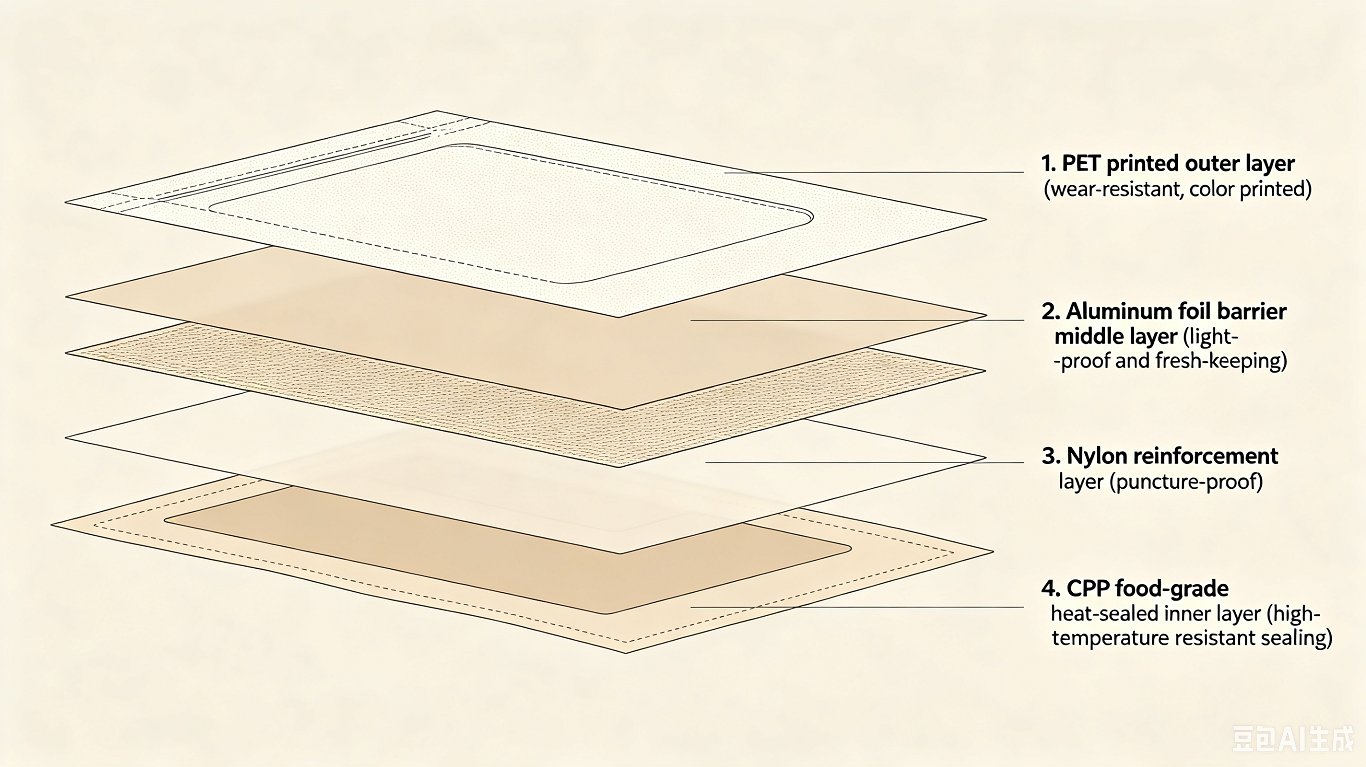
Retort pouches are multi-layer composite food packaging bags added with aluminum foil or high-barrier nylon film. They can withstand 121℃ to 135℃ steam sterilization, which is the mainstream packaging choice for steamed sweet potato strips, braised snacks and instant food that need full sterilization before leaving the factory.The middle aluminum foil layer cuts off light, oxygen and moisture at the same time, greatly slowing down the oxidation of starch and sugar in dried root snacks. Qualified retort food packaging bags can extend the shelf life of steamed vegetable strips to 12–18 months without adding excessive preservatives.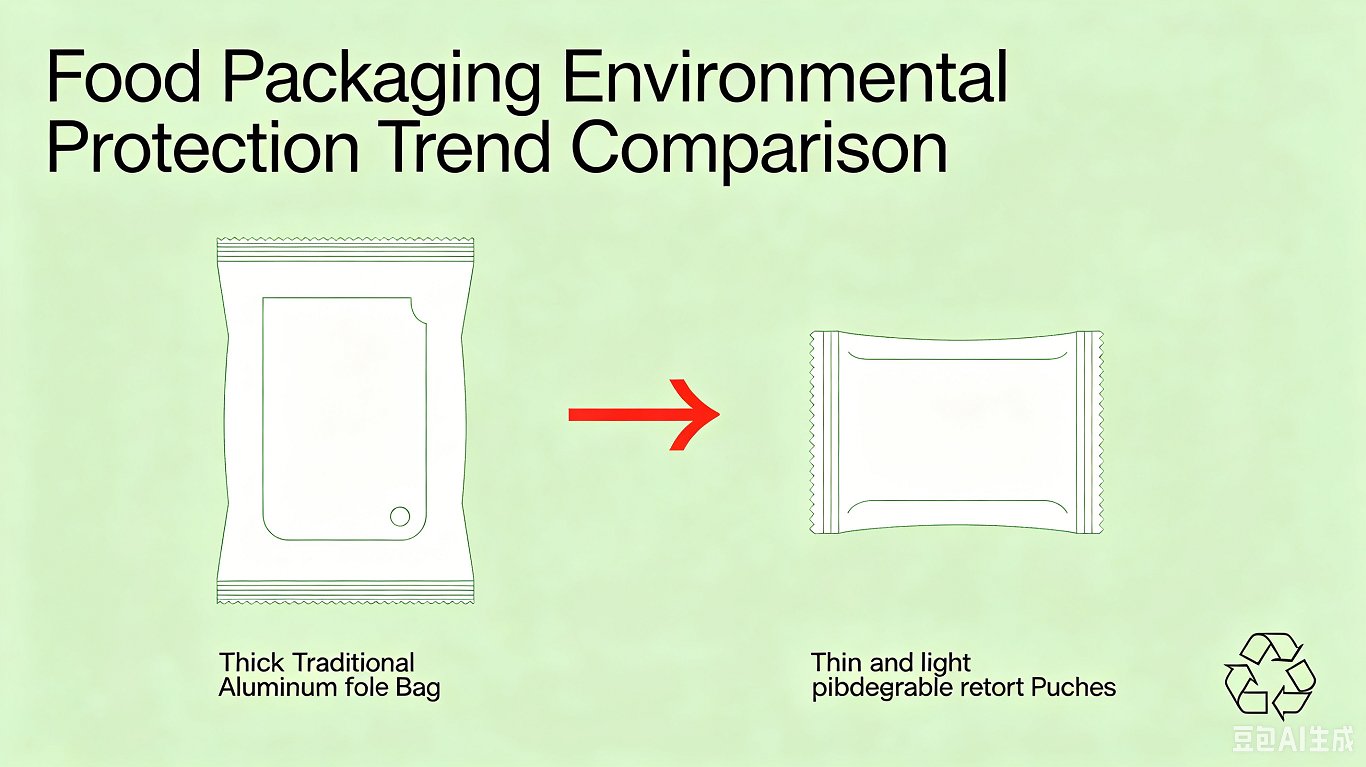
2. Three Core Indicators to Judge Good Food Packaging Bags
When food manufacturers screen food packaging bags, they often only pay attention to printing appearance and price, ignoring three key functional indicators that directly affect product sales.
2.1 Oxygen & moisture barrier property
Oxygen and water vapor are the main culprits for snack deterioration. Starch-rich snacks like steamed sweet potato strips are prone to softening, mildew and browning once exposed to air. High-barrier food packaging bags with aluminum foil can control the oxygen transmission rate at an ultra-low level, locking the original crisp taste of dried snacks. Transparent non-aluminum retort bags are more suitable for brands that want to display food texture on retail shelves, with slightly weaker barrier performance.
2.2 Heat-sealing stability
Seam leakage is one of the most frequent after-sales problems of food packaging bags. After high-temperature sterilization, inferior composite bags are easy to crack along the sealing edge during transportation and storage. Reliable food packaging bags use food-grade CPP inner film, which maintains tight adhesion after repeated high-temperature cooking and extrusion.
2.3 Food contact safety compliance
All films for food packaging bags must comply with food contact standards of different export regions. Recycled plastic film will precipitate harmful substances under heating, polluting steamed snacks and triggering customs inspection failures for exported food. Formal packaging materials will provide complete test reports for heavy metal, solvent residue and plasticizer detection.
3. Customized Design Tips for Snack Food Packaging Bags
Different snack forms need targeted food packaging bag structural design, especially strip-shaped food such as steamed sweet potato strips.Flat three-side-seal food packaging bags are the most cost-effective choice for strip snacks, which can fit slender strips without redundant internal space and reduce packaging material waste. Stand-up retort pouches are more suitable for large-capacity family-size dried snacks, with a wider front area for brand pattern and ingredient information printing.For brands focusing on health-oriented steamed dried snacks, many designers choose matte surface food packaging bags. Matte printing reduces excessive light reflection on supermarket shelves, conveying natural, additive-free product positioning to consumers visually.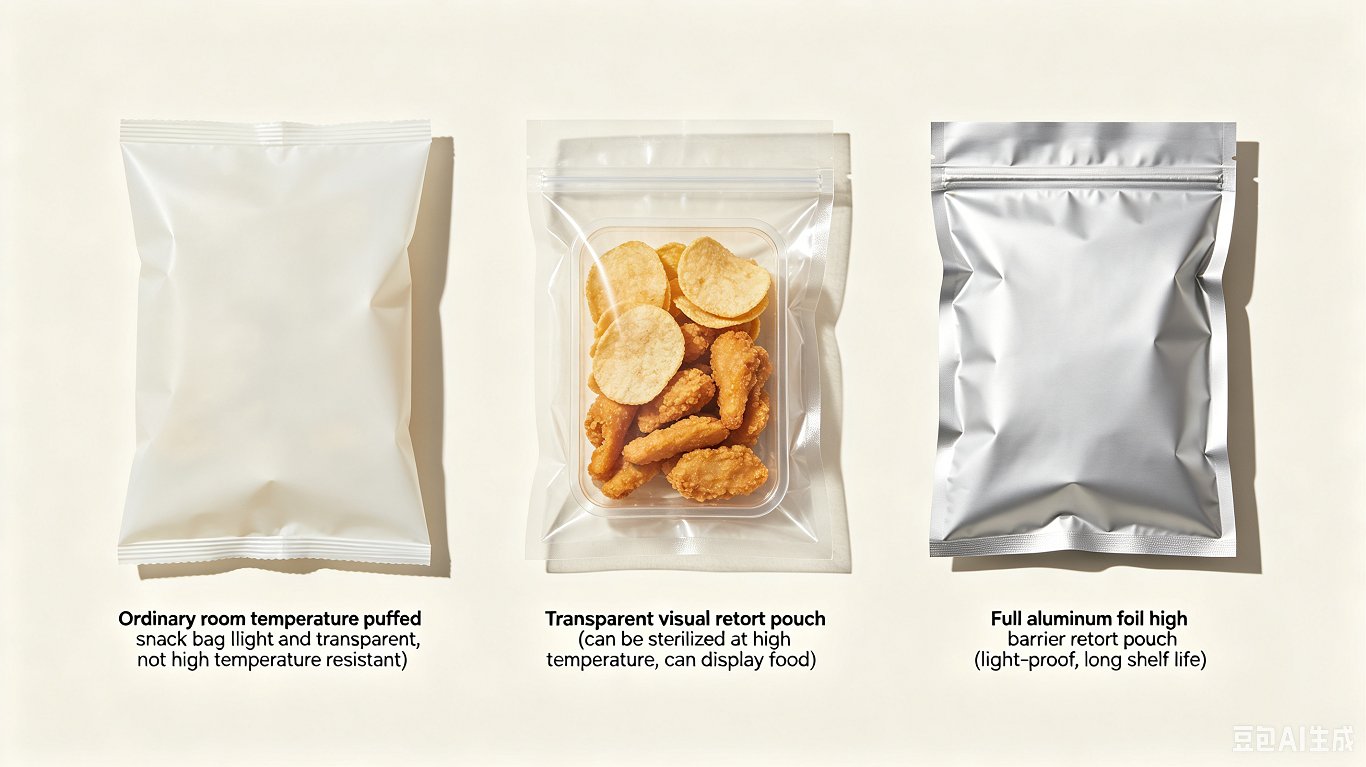
4. Future Development Trend of Food Packaging Bags
Sustainability has become an irreversible trend in the global food packaging industry. Biodegradable composite food packaging bags and thin high-barrier films are gradually replacing traditional thick aluminum foil pouches.For small-batch steamed dried snack brands, lightweight thin food packaging bags can cut down overall logistics weight and carbon emissions. Meanwhile, more retailers require packaging to add recyclable marks, pushing packaging manufacturers to optimize composite material formulas to balance barrier performance and environmental friendliness.In the long run, multi-functional food packaging bags that integrate high temperature resistance, high barrier and partial degradability will become the mainstream solution for heat-processed snack food.
Conclusion
Food packaging bags are not just simple outer containers for snacks. Their material, structure and printing design directly relate to food safety, shelf life and market competitiveness. For manufacturers producing steamed sweet potato strips and similar heat-treated dried food, mastering the basic knowledge of retort and composite food packaging bags can avoid unnecessary losses caused by mismatched packaging materials.