Retort Bag Packaging: Materials, Applications and Why It Matters for Food Preservation
Retort bags, also known as retort pouches, have become an important packaging solution for modern food processing. They are widely used for ready-to-eat meals, meat products, seafood, sauces, soups and other foods that require high-temperature sterilization.
Unlike conventional food packaging bags, retort bags are specially designed to withstand heat and pressure during the sterilization process. This makes them suitable for products that need to remain shelf-stable without refrigeration, provided the food and sterilization process are properly validated.
But what makes retort bag packaging different from ordinary plastic food bags? The answer lies in its material structure, barrier properties and ability to maintain package integrity under demanding processing conditions.
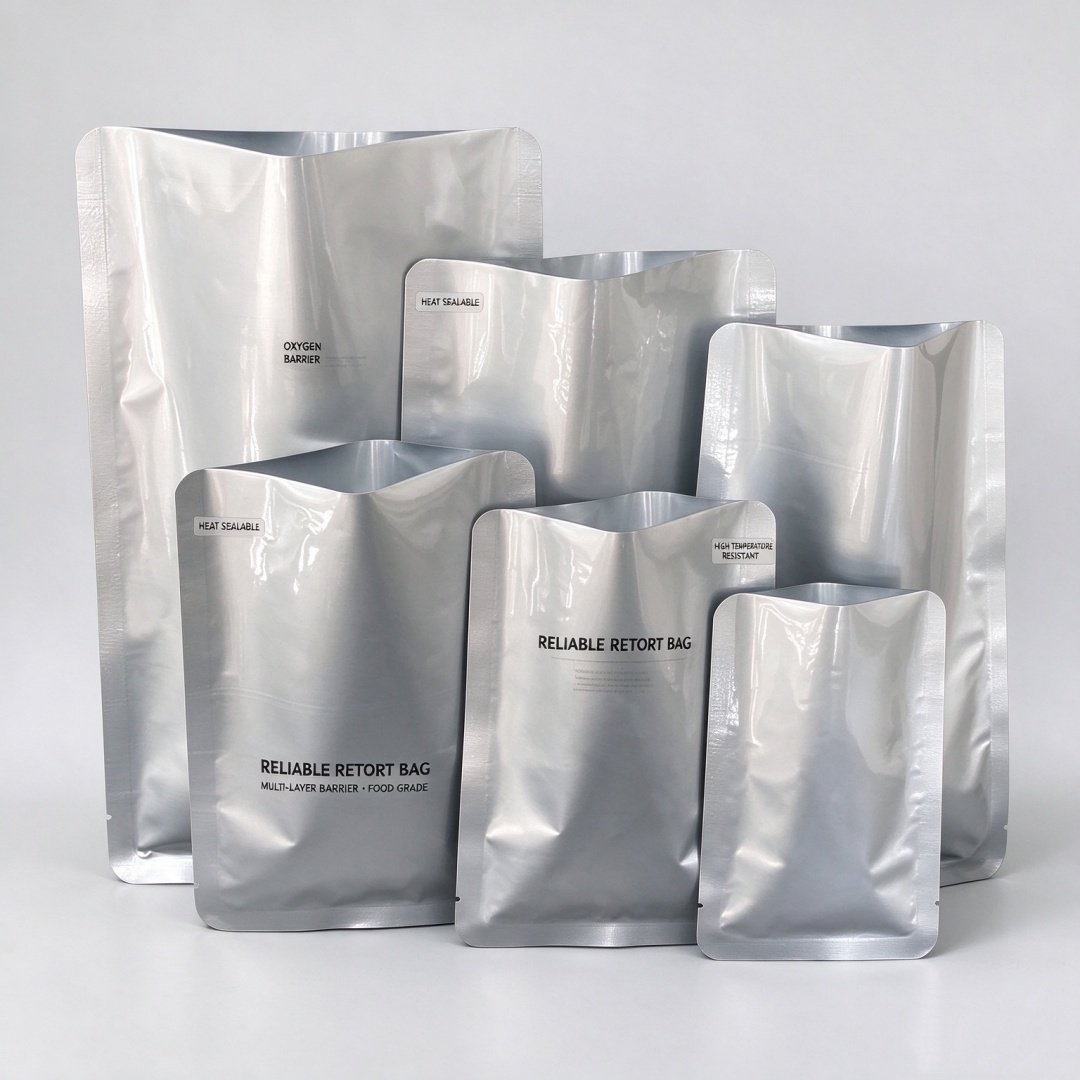
1. What Is a Retort Bag?
A retort bag is a multilayer flexible packaging pouch designed for food products that undergo thermal sterilization after filling and sealing.
During production, food is placed inside the pouch, the opening is heat-sealed, and the sealed package is processed in a retort system using controlled heat and pressure.
This process helps achieve commercial sterility and allows suitable food products to be stored at room temperature.
Retort packaging is often considered an alternative to traditional metal cans and glass containers. Its flexible structure offers several practical advantages, including reduced packaging weight, convenient storage and easier transportation.
2. Common Materials Used in Retort Bag Packaging
The performance of a retort bag depends largely on its multilayer material structure. Each layer serves a different purpose.
A commonly used aluminum foil retort structure includes:
PET (Polyester)
The outer layer provides mechanical strength, dimensional stability and a suitable surface for printing. It also helps protect the package during handling.
AL (Aluminum Foil)
Aluminum foil provides an excellent barrier against oxygen, moisture and light. It is particularly useful for food products that require strong protection against external environmental factors.
NY (Nylon)
Nylon can improve puncture resistance and mechanical durability. It is useful when the packaged food contains solid pieces or when the pouch needs additional resistance during transportation and handling.
RCPP (Retort Cast Polypropylene)
RCPP is commonly used as the inner heat-sealing layer. It is designed for food contact and must be suitable for the intended retort conditions.
One possible material structure is PET/AL/NY/RCPP. However, this is not a universal specification. The final structure should be selected according to the food product, sterilization conditions and required shelf life.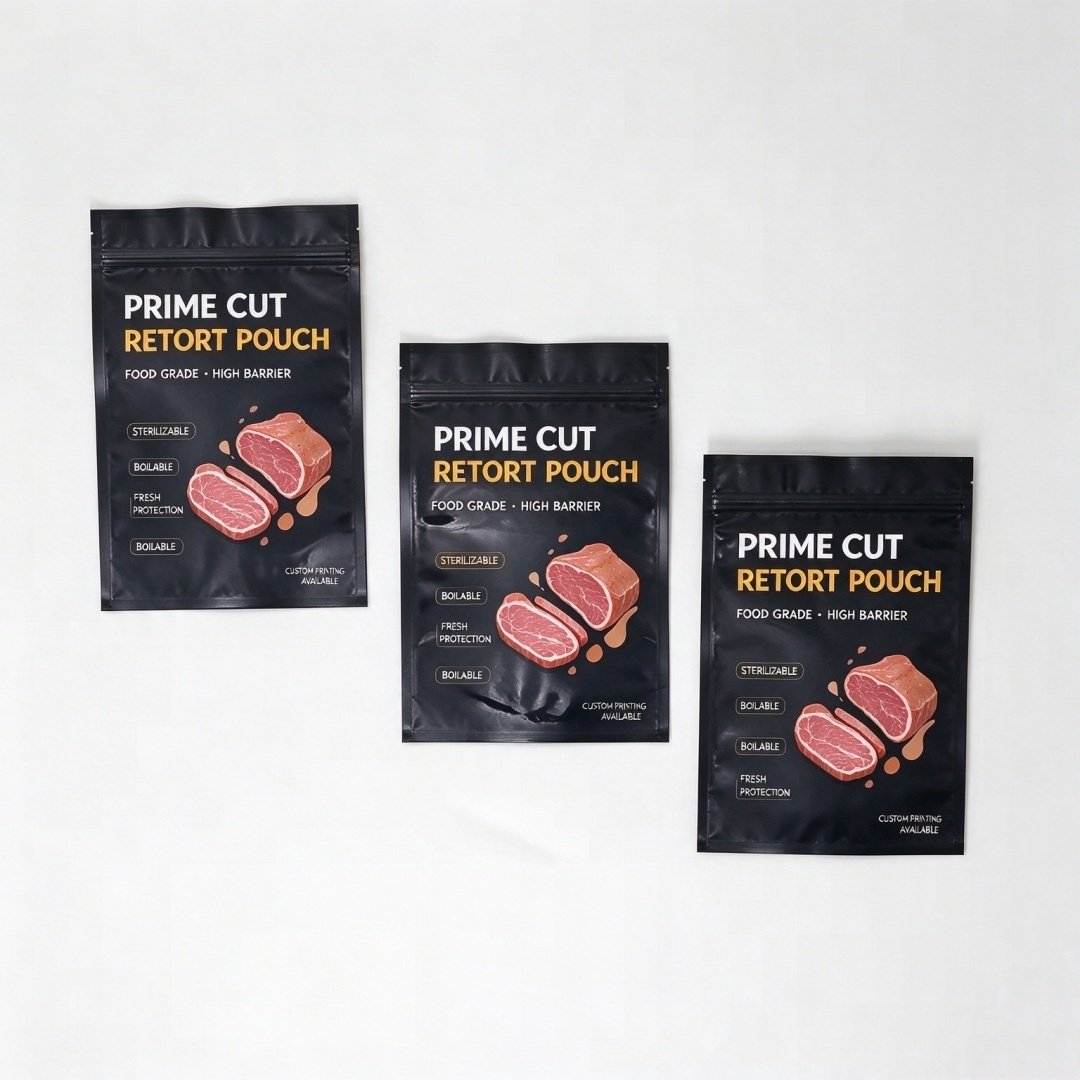
3. What Food Products Use Retort Bags?
Retort bags are used across different segments of the food industry.
Ready-to-Eat Meals
Rice meals, prepared dishes and ready-to-eat food products are common applications. Flexible retort packaging provides a convenient format for products intended for room-temperature storage.
Meat and Poultry Products
Cooked meat, beef stew, chicken products and other processed meat foods often require packaging that can maintain its integrity during thermal processing.
Seafood Products
Tuna, fish, shrimp and other seafood products can be packed in retort pouches. Barrier performance is particularly important for protecting product quality during storage.
Soups and Sauces
Soup, curry, tomato sauce and other liquid or semi-liquid foods are also suitable applications, provided the pouch structure and sealing system are designed for the product.
Pet Food
Wet pet food is another important application for retort packaging. The packaging needs to withstand sterilization while protecting the product throughout distribution and storage.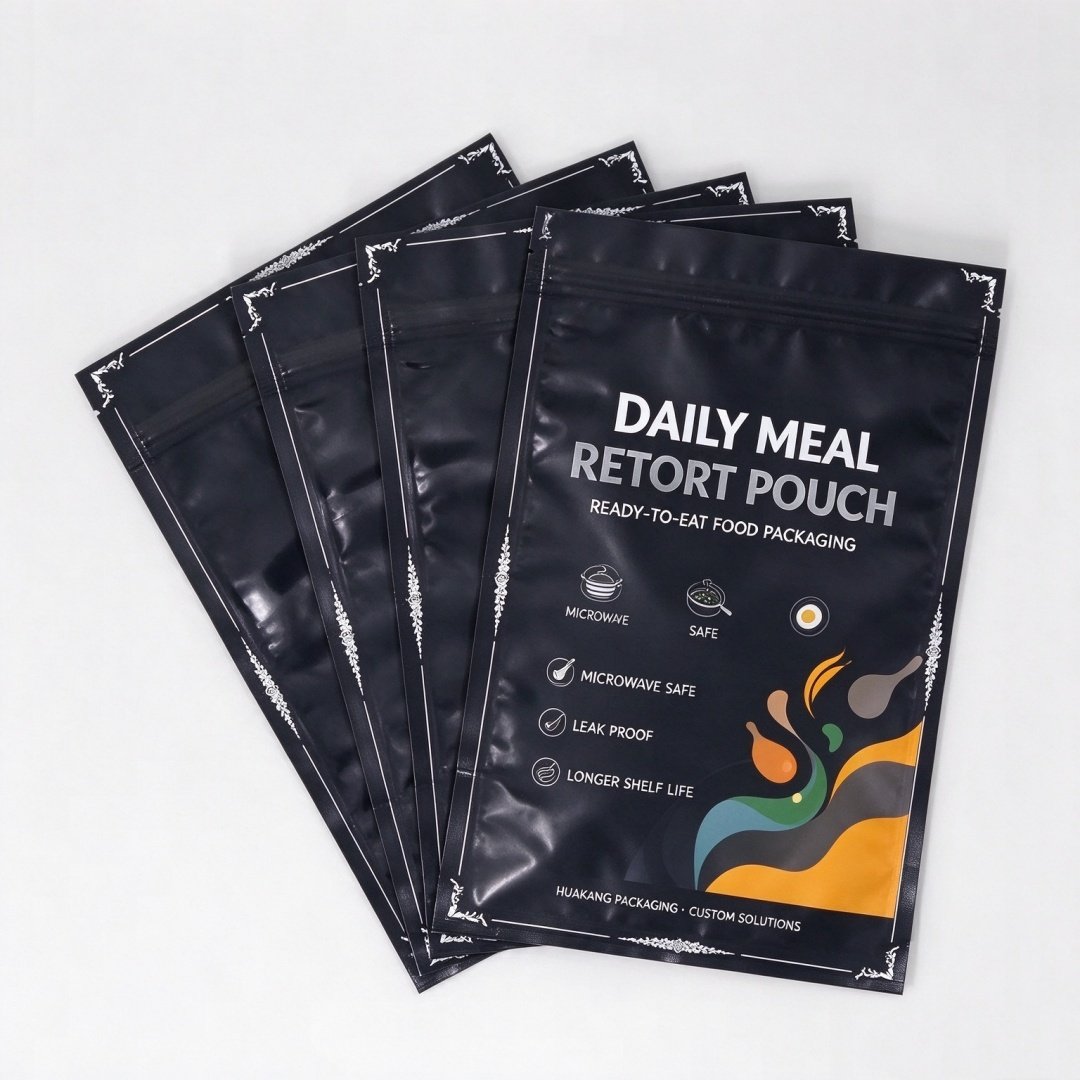
4. Retort Bags vs. Ordinary Food Packaging Bags
Although retort bags and ordinary laminated food pouches may look similar, they are designed for different processing conditions.
The main difference is their resistance to high-temperature sterilization.
Ordinary food packaging bags may be suitable for dry foods, frozen products or products filled under normal conditions. However, they are not necessarily suitable for post-sealing sterilization.
Retort bags require specialized materials, adhesives and printing systems that can maintain their performance under heat and pressure.
Using ordinary packaging materials in a retort process may result in delamination, seal failure, leakage or other package defects.
Therefore, choosing packaging based only on appearance or thickness is not sufficient.
5. What Should Food Manufacturers Consider When Choosing Retort Bags?
Selecting the right retort pouch involves more than choosing a material combination.
Several factors should be considered:
Sterilization Temperature and Time
Different food products require different thermal processing conditions. The packaging structure must be suitable for the actual process.
Barrier Requirements
Products sensitive to oxygen, moisture or light may require aluminum foil or an appropriately designed transparent high-barrier structure.
Pouch Size and Capacity
The dimensions, filling weight and thickness of the filled pouch can affect heat penetration and package performance.
Sealing Performance
The sealing layer must maintain a reliable closure throughout filling, sterilization, cooling and transportation.
Food Characteristics
Liquid foods, oily products, acidic sauces and solid food products may require different material and structural considerations.
It is important to evaluate the complete packaging system rather than selecting materials based on a general specification.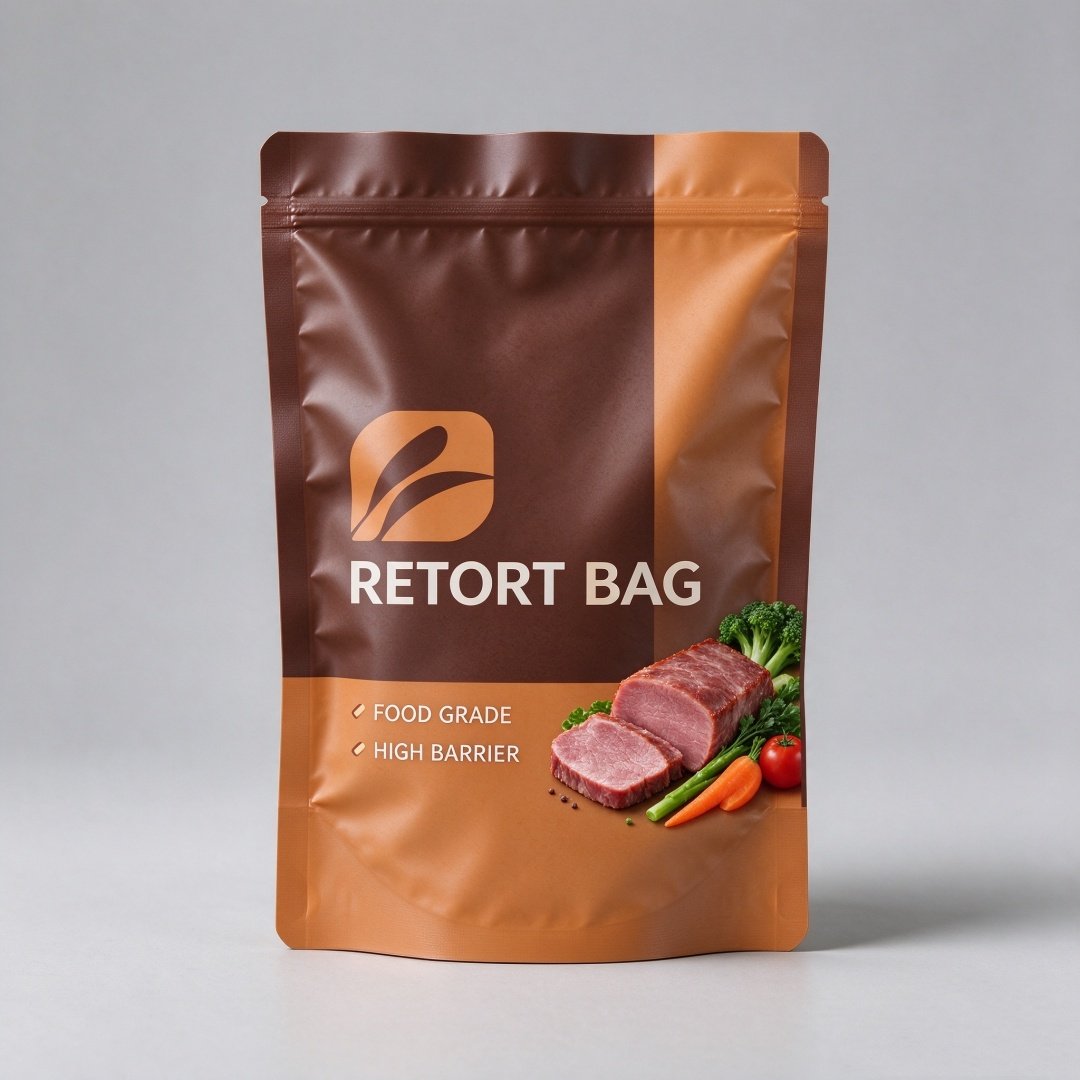
6. The Growing Role of Flexible Retort Packaging
Food manufacturers are continuously looking for packaging formats that combine product protection, convenience and efficient logistics.
Compared with rigid containers, flexible retort bags can offer lower packaging weight and a compact storage format. Their flat shape also makes them convenient for packing, handling and transportation.
Another area of development is transparent retort packaging. Unlike traditional aluminum foil structures, transparent high-barrier materials allow consumers to see the food inside.
However, transparent retort packaging requires careful consideration of oxygen barrier performance, light protection and resistance to the actual sterilization process.
The choice between foil and transparent structures ultimately depends on the product and its packaging requirements.
Conclusion
Retort bags play an important role in modern food packaging, particularly for products that require high-temperature sterilization and extended shelf stability.
Their performance depends on the combination of suitable barrier materials, heat-resistant sealing layers, reliable lamination and proper processing conditions.
For food manufacturers, understanding these factors is an important step toward selecting packaging that protects product quality throughout production, storage and distribution.
Choosing the right retort bag should always begin with the food product and its actual processing requirements.